Android promises to write software once and deliver it to millions of different devices. But cameras have something inherently physical to them: lenses, sensors, etc. How does Android keep its promise when hardware is involved for a camera app like VWFNDR™ + MBL?
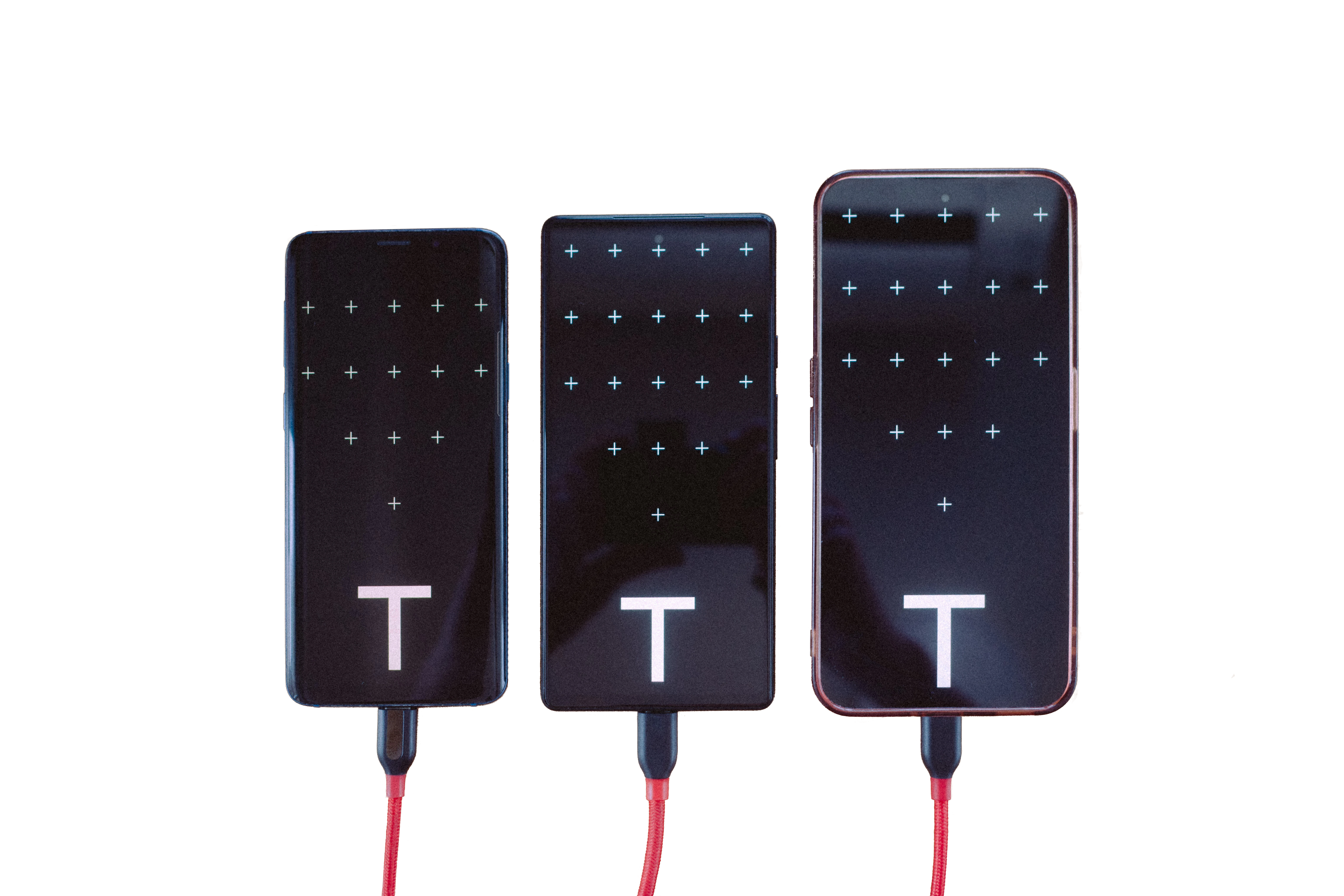
Left to right: VWFNDR™ + MBL on Samsung S9, Google Pixel 6a, Nothing Phone (2)
Abstractions.
We buy our phones from consumer brands like Samsung, Xiaomi, or Nothing. The vast majority of them don’t make their cameras in-house; instead, they buy ready-to-integrate modules from specialised manufacturers such as Sunny Optical or LG.
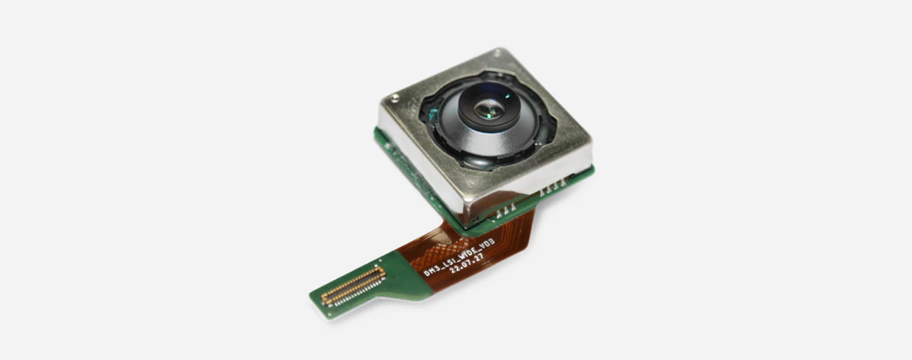
A wide-angle camera module from Samsung
These modules come with different capabilities and ways of being operated: technology and needs evolve. To run them all, Android provides a shared language covering a defined set of camera operations: abstractions.
These enable teams like VWFNDR™ to produce camera software such as MBL independently.
A double-edged sword
In 2016, LG and Huawei introduced the first dual-camera phones. At that time, Android camera abstractions had no concept of how to handle such a setup. But manufacturers weren’t stopped by that because they could write software supporting their specific camera module, knowing its exact capabilities and how to operate it.
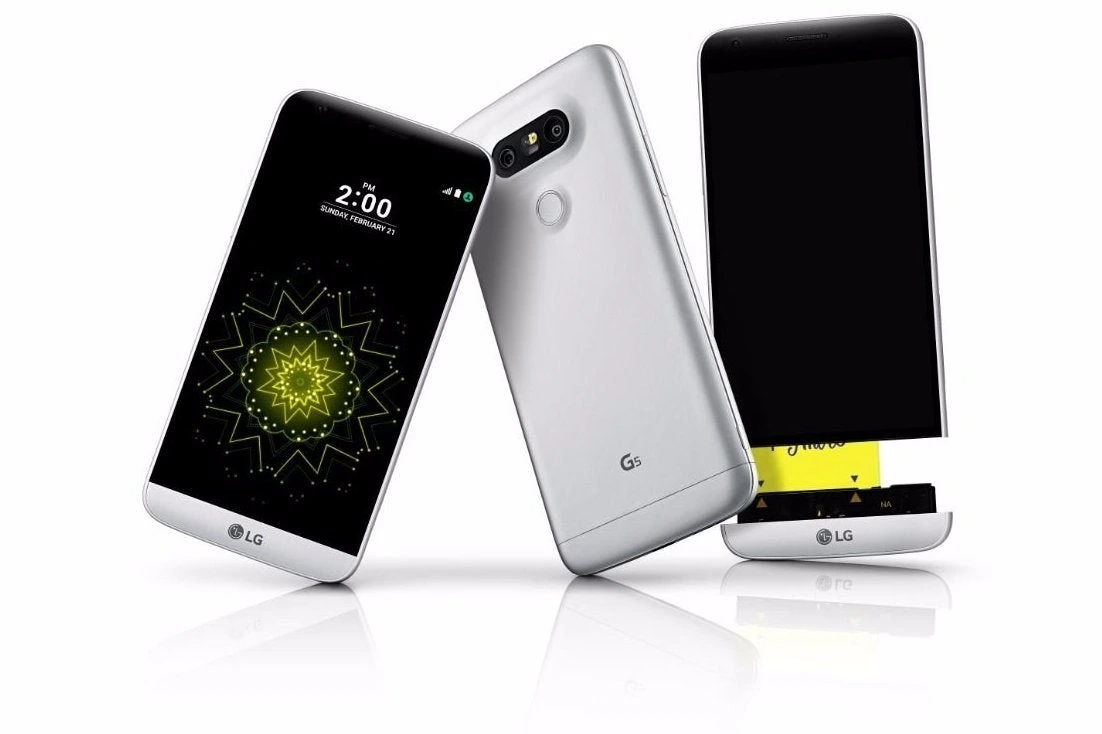
LG G5 released in 2016, featuring both a 16 MP and an 8 MP wide-angle camera
However, this means abstractions are doomed to always lag behind what’s standard. 10 years later, no one bats an eye at a multi-camera phone. Yet, Android is still consolidating what “operating a multi-camera setup” should look like in software, and manufacturers still have to catch up.
An act of balance
On the brighter side, abstractions give us control. For VWFNDR™ + MBL, this means being able to capture clean DNGs and to derive beautiful JPEGs from them, essentially bypassing most of our phones’ postprocessing routine.
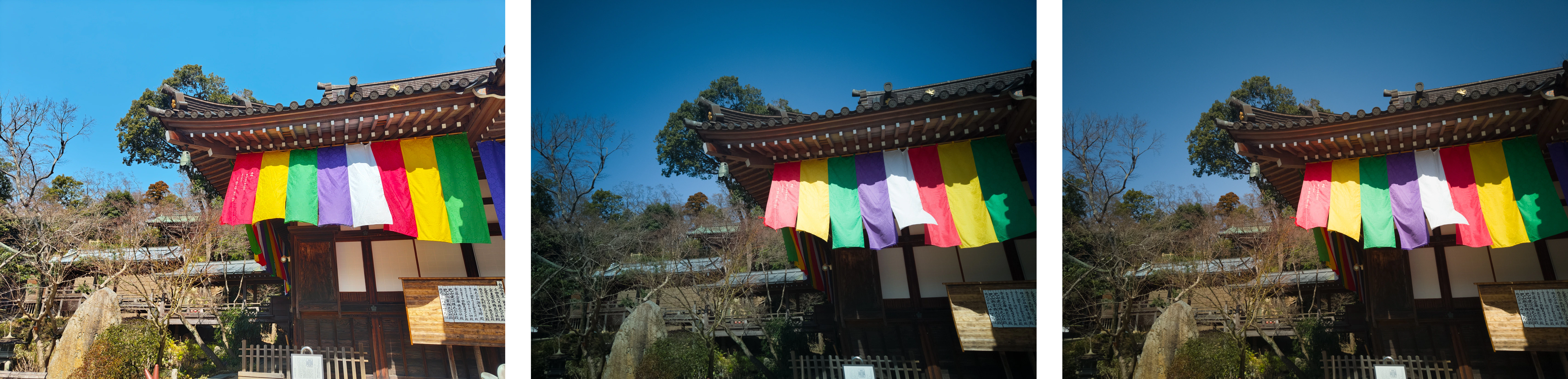
Nothing Phone (2) samples, left to right: stock camera JPEG, VWFNDR™ JPEG, VWFNDR™ DNG (balanced and exported with Lightroom)
And while abstractions are not perfect, sometimes they give enough primitives to push things further. For example, priority modes are another standard camera feature that is still not widely implemented by manufacturers (in all fairness, the shared language for them was only introduced as part of Android 16 last year).
Nonetheless, because there’s already an abstraction for operating the camera in manual mode, we were able to build our own priority algorithms around it. They allow VWFNDR™ + MBL to offer priority modes to every phone.
Working out those challenges and making the most of Android’s shared language made capturing clean and unprocessed pictures possible.
We wanted to take that idea further by also allowing VWFNDR™ + MBL shooters to prove that what they captured is real, a challenge that’s becoming increasingly important as AI-generated images become harder to distinguish from real ones.
Authenticity with provenance
For us, proving the authenticity of a photograph means being able to assert it was captured by a camera and not manufactured by other means. We discussed why this matters to us and to photography in our first article. This is a challenge Content Credentials, an open industry standard, aims to solve.

Content Credentials are like seals we put on our images. When VWFNDR™ + MBL takes a picture, it attaches a seal to it, saying it was captured with MBL.
Thanks to the technology behind Content Credentials (which we find really interesting, and wrote more about here (opens in a new tab)), only a genuine version of VWFNDR™ + MBL can put that exact seal on a captured image.
Later on, this seal can be verified on dedicated platforms and, by extension, be used to verify whether the picture it is attached to is genuine.
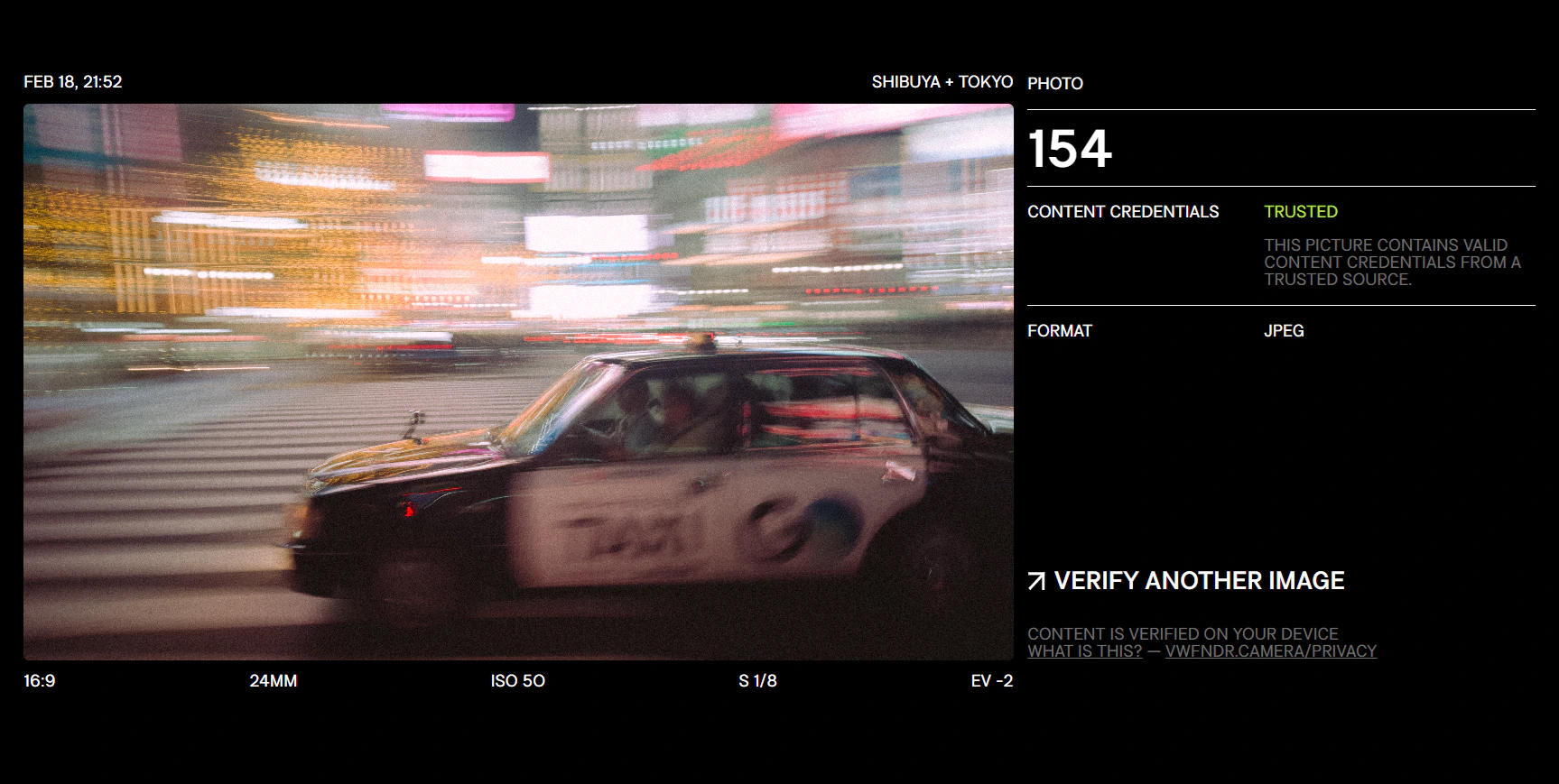
Content Credentials verification on verify.vwfndr.camera
To ease verification for VWFNDR™ users, we designed and developed an online platform: verify.vwfndr.camera (opens in a new tab). On it, you can upload pictures to verify their content credentials. Images captured with MBL should appear as trusted.
Fragility & relevance
While those seals are nice, they are also fragile. Upload the image to an SNS, edit it in software that does not support them, and they are gone.
Joining the C2PA ecosystem behind those seals was also challenging (conformance audits, legal agreements, etc.). Being fully part of it, at our scale, remains complicated.
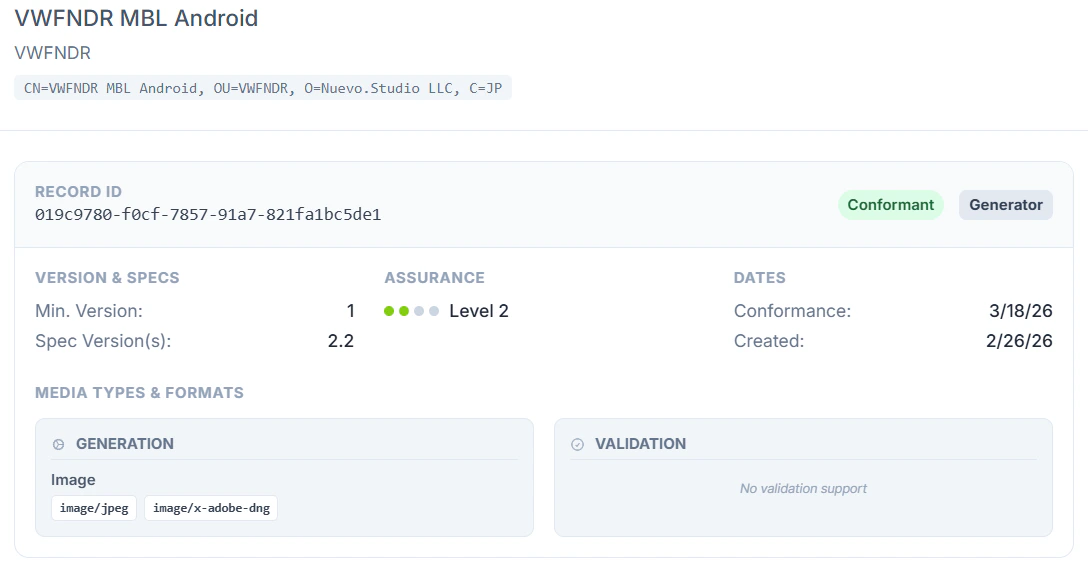
VWFNDR™ + MBL C2PA conformance record (see it for yourself (opens in a new tab)). VWFNDR™ is the 4th company to ever support C2PA under assurance level 2, and the 2nd company, after Google, to support it for DNG.
At the end of the day, there’s a reason VWFNDR™ is one of the few non-million-dollar companies supporting Content Credentials: trust is hard, deploying it correctly, too.
So why bother? Why go through all the trouble?
Because we believe in the mission: authenticity.
While Content Credentials can be frustrating, they are just a tool to achieve it. Today, it’s the only relevant and open industry standard in that field. As VWFNDR™, we’d rather rally under the same banner, as much as we can, and take the opportunity to spread the word.

Authentic photography
That’s a glimpse at the challenges behind delivering authentic photography with VWFNDR™ + MBL. Importantly for us, we’re happy to do it for free with Android: real photography must remain in people’s hands.